Why Roof Flashing Fails and How to Fix It
Roof flashing failure Prescott AZ happens when UV, monsoon rain, and thermal movement break seals at valleys, chimneys, and wall joints. Here is how we fix it.
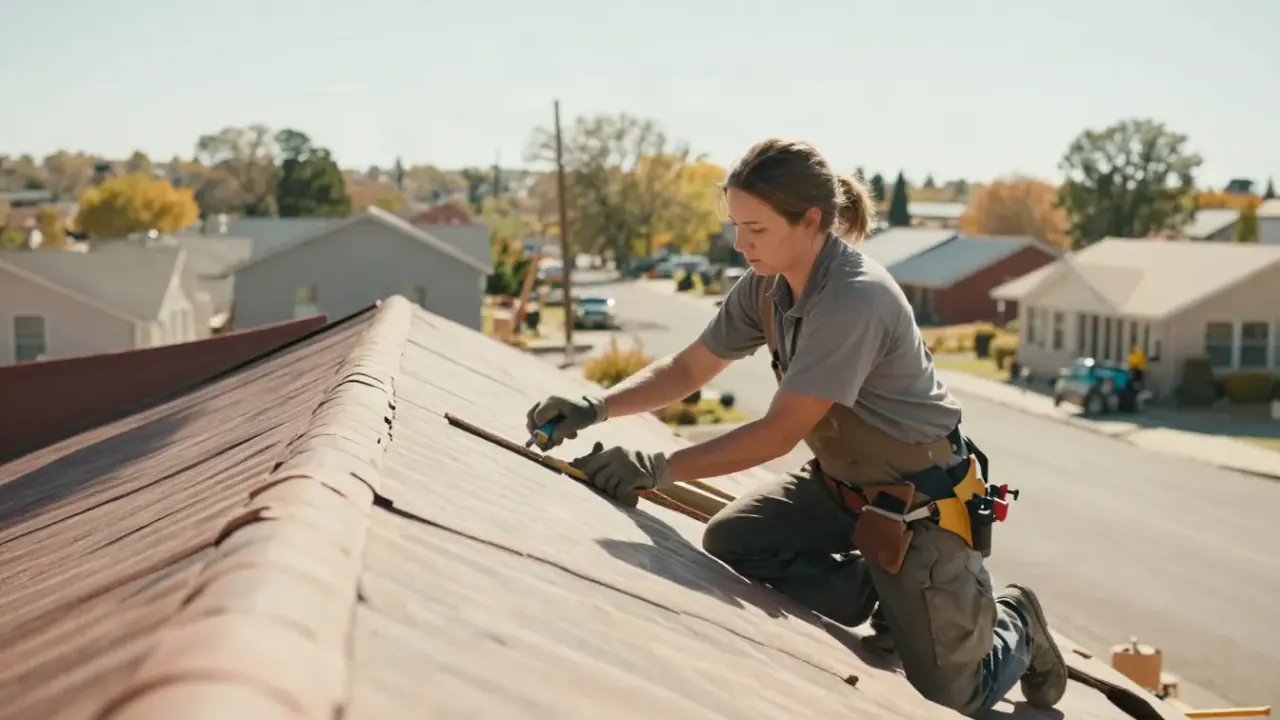
Roof flashing failure in Prescott AZ almost always traces back to one of four things: UV-rotted sealant, thermal movement that pulls metal away from the roof, corrosion from monsoon moisture, or a bad original install. Flashing is the thin metal and membrane that seals every roof penetration and transition - valleys, chimneys, skylights, wall-to-roof joints, and vents - so when it fails, water finds the easiest path into your attic. We fix flashing on Prescott roofs every week, and in this post we walk through why it fails here, what it looks like when it does, and how to repair or replace it before a small drip becomes a $4,000 ceiling repair.
What Roof Flashing Does and Why It Fails First
Roof flashing failure Prescott AZ is the breakdown of the metal or membrane that directs water away from roof joints and penetrations. It is the first component to fail on most roofs because it takes the most stress and has the least material to absorb it.
Think about what flashing actually does. It sits at the seams where two different planes of the roof meet, or where the roof meets a vertical surface like a chimney or wall. Water pools there. Sun bakes it. Wind pushes it. And every time the roof deck expands in July heat and contracts in a 22°F January night, the flashing moves a fraction of an inch. Over 10 to 15 years, that movement works sealant loose and fatigues metal.
We tell homeowners to picture flashing as the roof's weatherstripping. It is not structural. It is not thick. It just has to stay watertight, and in northern Arizona it is asked to do that under some of the harshest conditions in the country. If you want the full picture of how we handle these repairs across the region, our Roof Repair Prescott AZ team handles everything from a single valley re-flash to full tear-offs.
Why Does Roof Flashing Fail in Prescott AZ?
Roof flashing fails in Prescott AZ because the local climate combines intense UV, a hard monsoon season, and 40-degree day-to-night temperature swings that no sealant is designed to survive forever. Those three forces attack flashing from different directions at the same time.
Here is what each one does:
- UV degradation. Prescott sits at roughly 5,400 feet, and UV intensity climbs about 4% to 5% per 1,000 feet of elevation. Sealants that last 20 years at sea level often fail in 8 to 12 years here. The rubberized caulk around a vent boot will crack and pull away from the pipe long before the shingles around it show any wear.
- Monsoon stress. From early July through September, Prescott gets the majority of its annual precipitation in violent afternoon storms. Two inches of rain in 45 minutes finds every gap. Flashing that survived a gentle spring drizzle gets tested hard, fast, and repeatedly.
- Thermal movement. A roof surface can hit 160°F in direct July sun and drop to 60°F the same night. Metal flashing expands and contracts with that swing. Nails back out. Seams open. Step flashing slides out from under the shingle course it was tucked beneath.
- Corrosion. Mix monsoon moisture with the pine needles and dust that collect in valleys and behind chimneys, and you get a mildly acidic sludge that eats galvanized metal and cheap fasteners.
We see the results of all four every week in neighborhoods like Roof Repair in Hassayampa Village, where mature pines drop debris that holds moisture against flashing for weeks at a time. That trapped moisture is what turns a slow galvanized corrosion problem into an active leak.
The Most Common Flashing Problems We Find in Prescott
The most common roof flashing problems Prescott homeowners call us about are failed pipe boots, lifted step flashing, cracked counter-flashing at chimneys, and deteriorated valley metal. Each one has a distinct signature if you know where to look.
Pipe boots and vent flashing
The rubber collar around a plumbing vent pipe is the single most common leak source on a Prescott roof. That rubber is the first thing UV kills. When it cracks, water runs straight down the pipe and into the attic. You will usually see a brown stain on the ceiling directly below the vent, not somewhere random.
Step flashing at walls and dormers
Step flashing is the L-shaped metal that steps up a sidewall alongside each shingle course. It fails when nails back out from thermal movement or when the metal was never properly woven into the shingles in the first place. Once it lifts, wind-driven monsoon rain gets behind it easily.
Chimney counter-flashing
Counter-flashing covers the joint where chimney flashing meets the masonry. The sealant in that reglet joint - the groove cut into the mortar - is a wear item. It should be re-caulked every 5 to 7 years in Prescott. Most homeowners have never had it touched.
Valley metal and skylight curbs
Valleys collect everything: pine needles, grit, and water. If the valley metal has rusted through or the sealant at the edge has failed, water wicks under the shingles on both sides. Skylight curbs fail in the same way - the sealant around the frame cracks and the leak shows up as a ring on the drywall below.
How Do I Fix Roof Flashing in Prescott?
You fix roof flashing in Prescott by removing the failed material, correcting whatever caused it to fail, and reinstalling new flashing with the right sealant and fasteners for this climate. Patching over a failed boot or a lifted step flashing with more caulk buys you one monsoon season at best.
Here is the process we follow on a typical flashing repair:
- Find the actual entry point. Water travels. A stain near the fireplace does not mean the chimney is leaking. We water-test suspect areas and trace the path before we quote anything.
- Remove the failed flashing. That means pulling the shingles back to the nearest course, cutting out the old metal or boot, and cleaning the substrate down to clean decking or masonry.
- Rebuild the detail correctly. New step flashing woven into the shingle courses. New pipe boots sized to the actual pipe diameter. New counter-flashing set into a fresh reglet with polyurethane sealant rated for high UV.
- Fasten for movement. We use neoprene-washered screws and allow the metal to float where it needs to. Over-fastening is why original flashing tears itself apart.
- Seal and test. Sealant goes on the joints, not the whole surface. Then we water-test the repair before we pack up.
For a single pipe boot, that is a 1 to 2 hour job. A chimney re-flash runs 3 to 5 hours. A full valley replacement on a 2,000 square foot home takes a full day. If your flashing is failing because the roof itself is at the end of its life, we will tell you that plainly rather than sell you a repair that will not hold - our Flashing Repair Prescott AZ crew walks that line every day.
What to Watch Out For
Most flashing failures we get called to fix were made worse by an earlier repair. Knowing what not to do saves you real money.
- Caulk as a cure-all. Smearing roof cement over a cracked boot or a lifted step flashing hides the problem for a few months. It also traps moisture against the metal and accelerates the corrosion underneath.
- Wrong sealant. Standard silicone does not hold up to Prescott UV. We use polyurethane or butyl-based sealants rated for high-UV exposure. If a contractor shows up with a tube of clear silicone, ask why.
- Reusing old flashing. If the metal is bent, rusted, or has nail holes in it, it will leak again. Flashing is cheap. Reusing it is not.
- Ignoring the roof around the flashing. A new pipe boot on top of a shingle course that is already curling and brittle will not seal. The shingles have to hold the flashing down.
- Hiring on price alone. A $150 flashing repair that fails next monsoon costs you the repair plus the interior damage. Ask what sealant and fasteners the crew uses before you compare quotes.
We also see this pattern in the older housing stock around Roof Repair in Prescott Valley, where 1990s-era roofs are hitting their first real round of flashing failures all at once. If your neighborhood was built in that window, budget for a flashing inspection this year.
When to Call a Professional
Call a professional when you see water staining on a ceiling or wall, when you can see lifted or rusted metal from the ground, or when a repair you made last season has already failed. Flashing work requires getting on the roof, pulling shingles back, and re-sealing joints correctly - it is not a ladder-and-caulk-gun job.
Three signs it is time to stop guessing:
- Any ceiling stain, no matter how small. That stain means water is already inside the structure.
- Visible rust streaks, bent metal, or missing flashing pieces on the roof.
- A leak that shows up during monsoon storms but disappears in dry weather. That is classic flashing failure, not a shingle problem.
Our team at Prescott Roof Repair handles flashing repair, roof leak diagnosis, and full roof inspections across the Prescott area. We find the leak, fix it, and water-test the repair before we leave. If you are not sure whether you have a flashing problem or something bigger, we will tell you straight.
Frequently Asked Questions
Why does roof flashing fail in Prescott AZ?
UV exposure at 5,400 feet, monsoon rain, and 40-degree daily temperature swings break down sealant and metal faster here than in most of the country. Sealants that last 20 years at sea level often fail in 8 to 12 years in Prescott.
How do I fix roof flashing in Prescott?
Remove the failed flashing, correct the underlying cause, and reinstall new metal or boot with high-UV polyurethane sealant and neoprene-washered fasteners. Most single-point repairs take 1 to 5 hours. Water-test the repair before closing it up.
How much does roof flashing repair cost in Prescott?
Typical 2026 pricing in Prescott runs $250 to $600 for a single pipe boot or small step-flashing repair, $600 to $1,500 for a chimney re-flash, and $1,200 to $2,800 for a full valley replacement. Interior damage repair is separate.
Who repairs roof flashing near me in Prescott?
Prescott Roof Repair repairs flashing on shingle, tile, metal, and flat roofs across Prescott and the surrounding communities. We diagnose the leak, quote the repair upfront, and water-test the work before we leave.
Can I just caulk my flashing instead of replacing it?
No. Caulk over a cracked boot or lifted step flashing hides the leak for a few months and traps moisture that accelerates corrosion. It is a temporary patch at best, not a repair.
Get Help with Roof Repair in Prescott
Flashing failures do not fix themselves, and every monsoon season they wait gets more expensive. Our team diagnoses the leak, repairs or replaces the flashing, and tests the work before we leave the roof.
Call Prescott Roof Repair at (928) 260-9145 to schedule a flashing inspection or repair. We serve Prescott, Prescott Valley, Chino Valley, Dewey-Humboldt, and the surrounding communities.